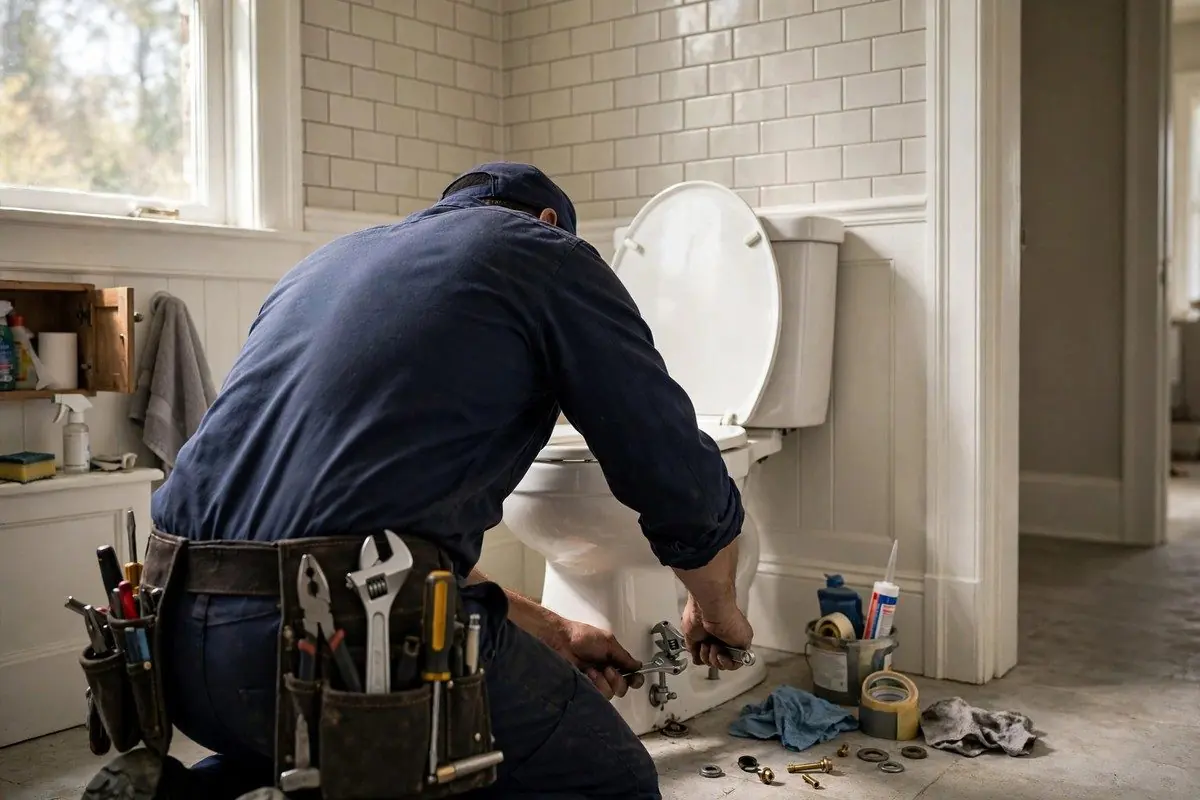
If a toilet is clogged, the first thing to put in it is nothing. Stop flushing, lift the lid and look at the water level. A plunger, a toilet auger and a little warm water solve most clogs. Chemical drain openers do not belong in a toilet bowl, because they rarely work and they make the next step hazardous.
This guide covers what to use, in what order, what never to pour in and when the problem is bigger than the bowl.
What to do first
- 1
Stop the flush
Do not flush again. If the water is rising, lift the tank lid and push the flapper down to stop more water from entering.
- 2
Protect the floor
Lay towels or newspaper around the base.
- 3
Plunge correctly
Use a flange plunger, seat it fully over the drain and push and pull with steady strokes for about 20 seconds.
- 4
Try warm water and dish soap
A squirt of dish soap followed by a bucket of warm, not boiling, water can loosen a soft clog.
Boiling water can crack porcelain, so use water you could comfortably put a hand in. Wait a few minutes between attempts.
Tools that help
| Tool | Use | Note |
|---|---|---|
| Flange plunger | First choice for toilets | The flange fits into the drain opening |
| Toilet auger | Reaches a clog beyond the bowl | Protects the porcelain with a rubber sleeve |
| Wet and dry vacuum | Removes water from the bowl | Use only on water, not on waste |
| Rubber gloves | Hygiene | Always wear them |
What not to put in a clogged toilet
- Chemical drain cleaners, which can damage pipes and burn skin.
- Boiling water, which can crack the bowl.
- A coat hanger, which scratches porcelain.
- More flushes, which overflow the bowl.
- Bleach mixed with other cleaners, which can release dangerous gas.
When it is not just the toilet
If other fixtures are slow, the tub gurgles when you flush or water backs up in a floor drain, the clog is in the line beyond the toilet. Stop using water and call. Our sewer line cleaning page explains what happens next.
If you have cleared the bowl but it clogs again within days, something is wrong with the toilet itself or the pipe below. Our toilet repair visit can pull the toilet and check for an obstruction or a damaged seal.
Preventing the next clog
Flush only toilet paper and human waste. Wipes labeled flushable do not break down fast enough. Avoid paper towels, cotton products and hygiene items. Teach children not to flush toys, and keep a plunger and a toilet auger in the bathroom.
Low flow toilets from the 1990s sometimes struggle with thick paper. If one clogs often, a replacement may be the answer.
If the toilet overflows
Shut off the water at the valve behind or beside the toilet by turning it clockwise. If the valve is stuck, lift the tank lid and hold the float up to stop the fill. Mop up quickly and ventilate the room, since sewage contaminated water needs careful cleanup.
Wear gloves and wash your hands well. Do not use the toilet again until it is cleared. If water has spread into carpeting or the ceiling below, tell us when you call.
When a toilet needs repair, not clearing
- The toilet rocks or leaks at the base.
- The tank runs constantly or the handle is loose.
- The bowl clogs again within days of being cleared.
- Water leaks around the tank bolts.
- The flush is weak even though the drain is clear.
These point to a worn seal, a failed flapper or a partial blockage that plunging will not reach. A repair visit solves the cause instead of the symptom.
Cleaning up safely
After clearing the clog, wash the floor with a household disinfectant and let it air dry. Throw away any towels that soaked up sewage water, and wash hands thoroughly. Keep children and pets out of the room until it is dry.
If water reached carpet or drywall, remove it quickly. Damp materials can grow mold within a couple of days.
Know your shutoff valve
Find the small valve behind or beside every toilet in your home before you need it. Turn it once a year so it does not seize. A working shutoff stops an overflowing tank fill in seconds and is the quickest way to limit water damage.
Toilet overflowing or backing up?
Call and we will get there as soon as we can.
A quick troubleshooting table
| What you see | Likely cause | Action |
|---|---|---|
| Water rises slowly and then drops | Partial clog in the trap | Plunge, then try the auger |
| Bowl fills and does not drain | Full clog | Stop flushing and plunge |
| Gurgling and slow drains elsewhere | Main line problem | Stop water use and call |
| Weak flush with clear drain | Rim jets blocked or low tank fill | Toilet repair |
Toilets, sewer and septic in Marlboro
Marlboro homes are served by public sewer in some areas and septic in others, and the difference affects what you can flush. Septic tanks tolerate very little beyond toilet paper, so keep wipes and products out of the system entirely. If you are on septic, the line that matters is the one to the tank.
The township's housing grew from the 1950s through the early 1990s, and older toilets from those decades may use more water per flush, but they are usually reliable. If you are on township water, the utility office can be reached at (732) 536-0188 about water issues on the utility side of the meter.
Questions homeowners ask
Warm water with a squirt of dish soap can help, and a flange plunger is the best tool. A toilet auger handles clogs beyond the bowl.
We advise against it. It rarely clears a toilet clog, and standing chemicals are hazardous when someone then plunges or snakes the toilet.
Repeated clogs point to too much paper, a low flow toilet, a partial blockage in the trap or a problem in the main line.
Use warm water. Boiling water can crack the porcelain.
It can be. Keep wipes and non-paper products out of the toilet, and ask a septic professional about the tank.