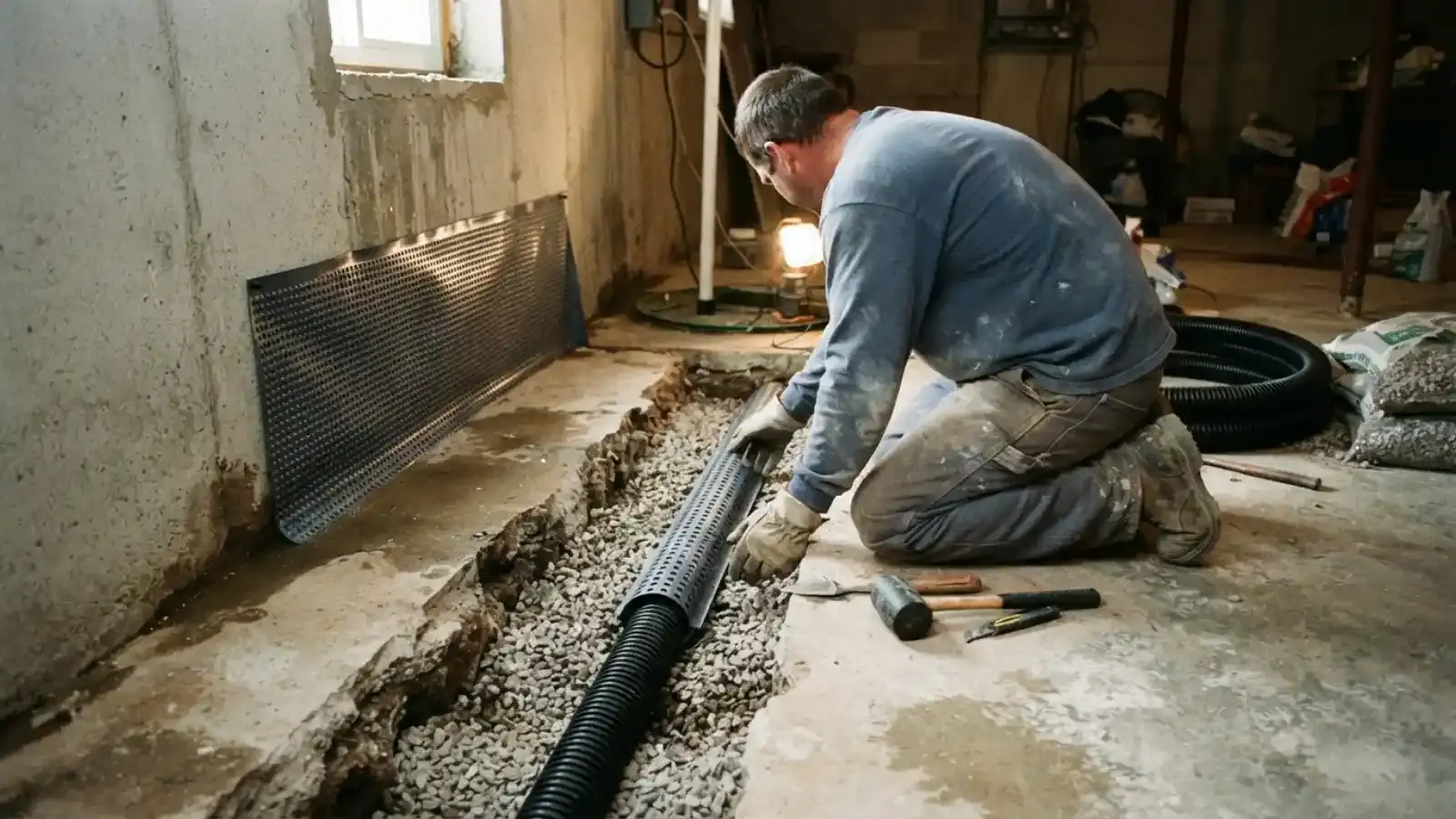
Basement waterproofing is about controlling where water goes before it reaches your living space. In Marlboro, where many homes have finished basements, the goal is to keep groundwater and surface water out or direct it to a pump, and to fix the cause rather than just the damp wall.
This page explains what causes basement water, the main waterproofing methods, and how we decide which fits your house.
Where basement water comes from
Water through the wall
Cracks in block or poured walls let groundwater push in.
Water at the floor edge
Pressure under the slab pushes water up at the joint between floor and wall.
Poor drainage around the house
Gutters, downspouts and grading that send water toward the foundation add to the load.
A plumbing leak that looks like seepage
Always rule out a pipe leak first. See our leak detection page.
Methods and what they do
| Method | What it does | Best for |
|---|---|---|
| Gutter and grading fixes | Moves roof and surface water away | Water entering after rain with no wall cracks |
| Interior drain and sump | Collects water at the footing and pumps it out | Seepage at the floor wall joint |
| Crack repair | Seals active cracks in walls | Individual cracks leaking |
| Exterior waterproofing | Treats the wall from outside | Persistent water through the wall, with access to dig |
There is no single best method. A house with a downspout dumping against the foundation needs a different answer than one with a high water table. We look at the whole picture before recommending anything.
How we assess a wet basement
We look for the stains, efflorescence and cracks that show where water enters, and we check gutters, downspouts and grading outside. We also check for plumbing sources and look at any existing sump pit.
From there we explain the likely cause and the options in order, starting with the least invasive fix that will actually work. Sometimes the answer is a drainage repair outside, not an expensive system inside.
Why Marlboro basements take on water
A lot of Marlboro housing was built in the 1980s and 1990s, and foundations from that era are now decades old with settled soil, aging drain tile and aging gutter systems. Heavy rain and storm systems test all of it at once.
Finished basements raise the stakes. Carpet, drywall and stored belongings suffer when water arrives, and a mold problem can follow. Tackling the water source early costs far less than repairing the finished space later.
Water in the basement?
Call and tell us when it happens and where you see it.
Before we visit a wet basement
- Note when the water appears, such as after rain, snowmelt or only in certain seasons.
- Photograph the stains and wet spots and the outside of the house on that wall.
- Check that gutters are clear and downspouts discharge away from the foundation.
- Move stored items off the floor and away from the affected wall.
Those four observations often tell us more than an hour of guessing. A basement that only leaks after a long rain usually has a drainage cause, while one that stays damp all year may point to a plumbing source or a high water table.
What affects the price of waterproofing
You get the plan and the price before work starts, and we explain the tradeoffs between options.
Related services
If a pump is part of the answer, see sump pump installation and repair. For a possible pipe source, see leak detection. We help homeowners in Marlboro, Colts Neck and Manalapan.
Frequently asked questions
Rain raises the water table and loads the soil around the foundation. Poor grading, clogged gutters and cracked walls give water a way in.
No. A pump removes water that reaches the pit. Waterproofing addresses how water enters or how it is directed.
Surface sealers rarely stop water under pressure. They may help with dampness but do not fix a drainage problem.
Water that appears only after rain points to groundwater. Water that appears constantly or near pipes may be a leak. We can check.
It reduces moisture, which mold needs. It does not replace cleaning up existing mold.
Yes. Call (732) 466-1098 any hour. For active flooding, we focus on stopping the source first.