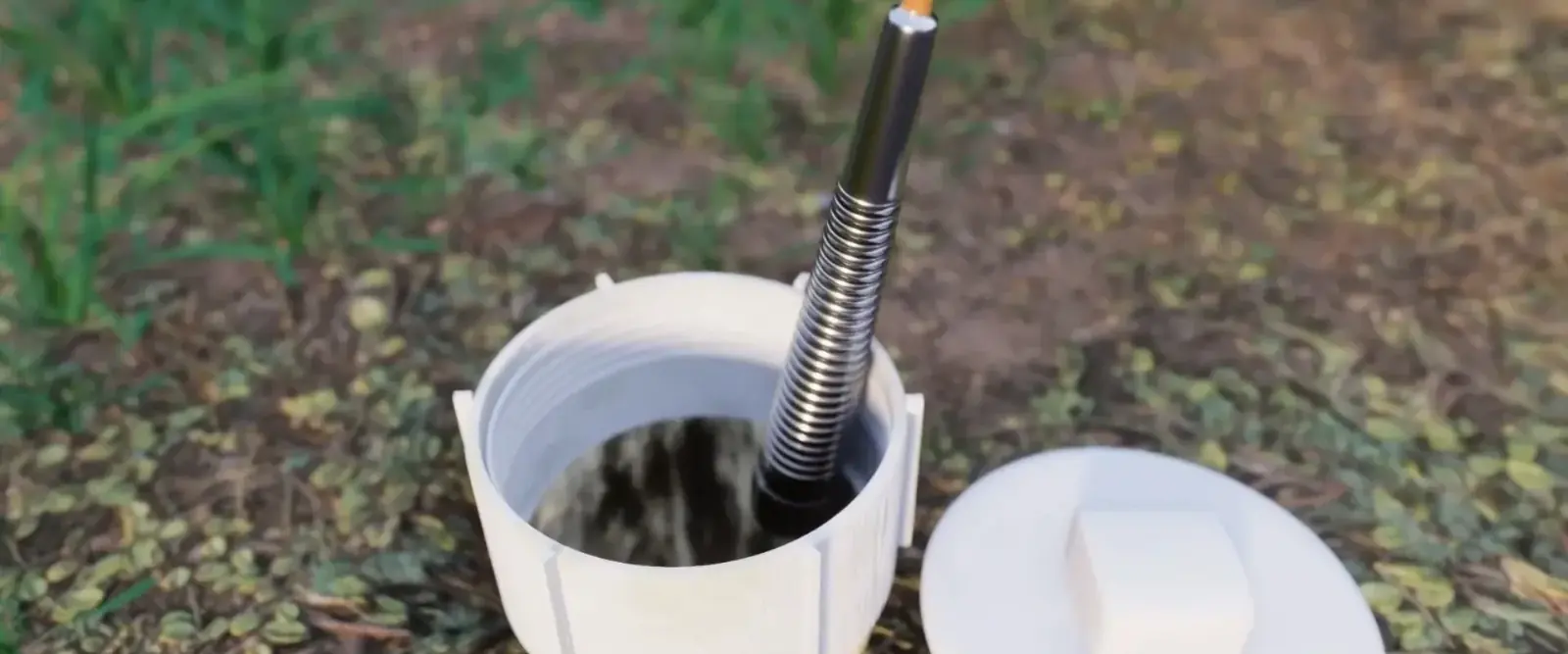
Epoxy sewer pipe lining is a trenchless repair that coats the inside of an existing pipe with a hardened resin, creating a new pipe within the old one. For a Marlboro homeowner with a cracked or root infested sewer line, it can avoid digging up a lawn or driveway, but it only suits some pipes.
This guide explains what lining is, what it can and cannot fix, what inspection comes first and how to compare it with a traditional repair.
What pipe lining is
A flexible tube soaked in resin is pulled or inverted into the damaged pipe, then inflated against the walls and cured in place. When the resin hardens, it forms a smooth, continuous liner that seals cracks and joints.
Because the work happens through existing access points, such as a cleanout, the excavation is limited. That is the main appeal for homes with mature landscaping or a driveway over the line.
When lining can work
- Cracks, small holes or leaking joints in a pipe that is still round and in place.
- Roots entering at joints, once the roots have been cut out.
- Pipes with several defects along a long run where spot digs would be extensive.
- Lines under hard surfaces where excavation is difficult.
When lining is not the answer
| Condition | Why lining struggles | Alternative |
|---|---|---|
| Collapsed or crushed pipe | The liner cannot pass through | Excavate and replace the section |
| Severe belly or sag | A liner follows the pipe, so the low spot remains | Repair the section with regrading |
| Offset joints with a large gap | Hard to line smoothly | Spot repair or replacement |
| Pipe in very poor condition | The host pipe must be able to support the liner | Replacement |
Honest contractors look first. A camera shows the pipe condition, and a locator confirms the route and depth. Our sewer inspection gives you that picture before you commit to any method.
How to compare lining with digging
Ask what each option includes. Excavation means opening a trench, replacing pipe, backfilling and restoring the surface, and the cost depends on depth and what sits above. Lining means preparing the pipe, which often includes cleaning and root removal, then installing the liner and testing it.
Also ask about reconnecting lateral connections, how the ends are sealed and what warranty comes with the work. A clear written scope lets you compare apples to apples. Our sewer line repair page lists the repair options we discuss.
What the lining process looks like
- 1
Clean the pipe
Roots, scale and debris are cut out so the liner can bond to bare pipe wall.
- 2
Inspect again
A second camera pass confirms the pipe is clear and shows any section the liner cannot pass.
- 3
Install the liner
The resin soaked tube is positioned, expanded against the wall and held under pressure.
- 4
Cure and reopen
The resin hardens, the ends are cut open and a final camera run checks the result.
The cure can use hot water, steam or light, depending on the product. Cure time varies with pipe length and temperature, so ask your contractor for the expected window and what you can use in the house meanwhile.
Lateral connections such as a branch from a bathroom must be reopened after curing. Ask how that is done and how it will be checked, because a missed opening causes a new backup.
Questions to ask a contractor
- What did the camera show, and can I see the footage.
- Why is lining suitable here rather than a spot repair or replacement.
- What is the warranty, and what does it exclude.
- How will lateral connections be reopened and verified.
- What happens if the liner cannot be installed after cleaning.
Signs your sewer lateral may need attention
Slow drains in several fixtures, repeated backups, a sewage smell near the yard and unusually green or soggy patches over the line all point to a problem. None of them proves the pipe needs lining. They are reasons to look with a camera before deciding anything.
If your home is older, ask whether the line was ever inspected. A baseline recording is useful even when everything looks fine, since it lets you compare later.
How lining compares with other trenchless methods
| Method | What it does | Consider |
|---|---|---|
| Cured in place lining | Creates a new pipe inside the old one | Needs a pipe that is still in place |
| Pipe bursting | Breaks the old pipe and pulls a new one through | Needs access pits at each end |
| Open trench | Digs down and replaces the pipe | Most disruptive, most direct |
Each method suits different conditions. A contractor who offers only one method will tend to recommend it. Ask what alternatives were considered and why they were set aside.
Keep the records
Ask for the camera footage, the liner specification and the written warranty after any lining job. Store them with your house papers. A future buyer or inspector will want to know that the line was lined, when and by whom.
Plan around the access points
Lining works through existing openings, so the cleanout location matters. If yours is buried or missing, a small access dig may be needed. Ask where access will be made and how the surface will be restored before work starts.
Wondering whether your line can be lined?
Call us. A camera visit tells you what is possible.
Sewer pipe lining and Marlboro homes
Many Marlboro homes date from the 1970s through the 1990s, so sewer laterals can be decades old. Pipe materials from that era vary, and the host pipe condition decides whether lining is possible. A camera look is the only way to know.
Whether lining or digging, permit rules vary, so ask the Marlboro Township Construction Division at (732) 536-0200, extension 1800. Plumbing in the township is reviewed before a Certificate of Occupancy, and final inspection is required for new work.
Questions homeowners ask
Manufacturers describe liners as long lasting, but results depend on the condition of the host pipe and the quality of the installation. Ask for the written warranty terms.
Slightly, because the liner has thickness. In most residential lines the flow remains adequate, and a smooth interior can help.
No. It requires specific equipment and training. We inspect and explain whether lining or a different repair makes sense.
No. The liner follows the existing shape, so a low spot remains. That section usually needs excavation.
Lined pipes can still collect paper and grease. Good habits and occasional cleaning keep them flowing.