Coconut oil is not a safe drain cleaner and it is not a safe thing to pour down a drain. It is liquid when warm and solid when it cools, and a drain is a cool place. In a Marlboro kitchen sink the oil can coat the pipe wall and harden, which makes a future clog more likely rather than less.
This guide explains why the idea spreads, what really happens in the pipe, what to do with oil instead and when a slow drain needs a plumber.
Why people think it works
Online tips claim that coconut oil lubricates the pipe or melts with hot water and carries debris away. The oil does melt at warm room temperature, so it looks harmless going down. The problem begins a few feet later, where the water cools and the oil stiffens again.
Once it sets, it forms a waxy film. Hair, food scraps and soap scum stick to that film, and the pipe narrows a little more with each use.
What actually happens in the pipe
| Stage | What the oil does | Result |
|---|---|---|
| Pouring | Warm oil flows down with hot water | Drain seems fine |
| Cooling | Oil solidifies on cold pipe walls | A waxy coating forms |
| Buildup | Debris sticks to the coating | Flow slows over weeks |
| Blockage | The pipe narrows to a plug | Slow drain or full clog |
The same thing happens with other cooking fats such as bacon grease, butter and shortening. The effect is worse in pipes that run through a cold basement or crawl space.
What to do with cooking oil instead
- Let used oil cool, then pour it into a sealable container and put it in the trash.
- Wipe greasy pans with a paper towel before washing.
- Use a drain strainer to catch food scraps.
- Flush a drain with hot water and dish soap only as light maintenance, not as a fix for a clog.
If you already poured it
A single spoonful is unlikely to cause trouble. Run hot water and a little dish soap for a minute and move on. If you have been using oil regularly, watch for slow drains, gurgling or a smell from the sink.
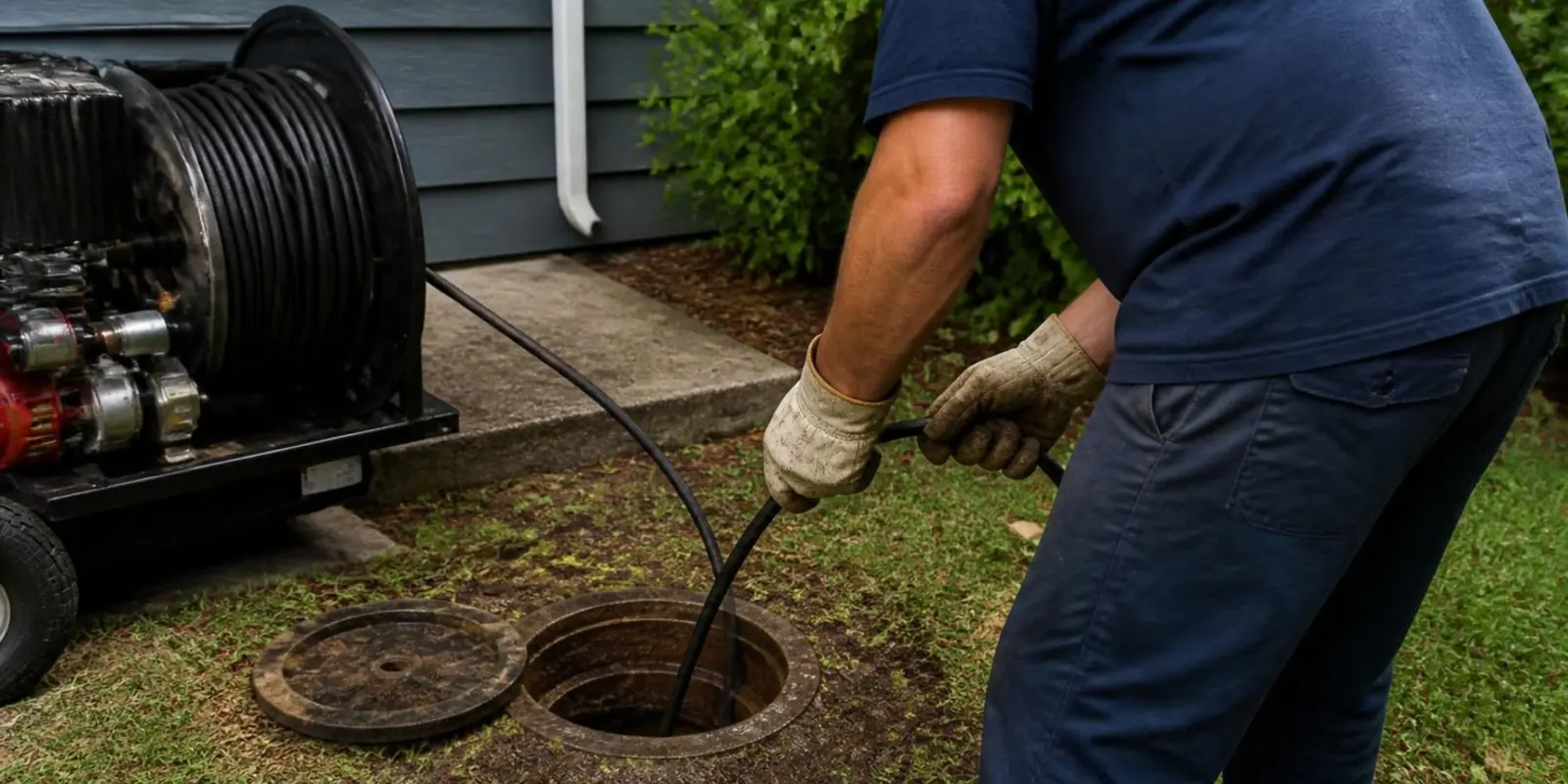
Those signs mean a coating has already formed. Our drain cleaning visit removes the buildup mechanically, and hydro-jetting scours the pipe wall when grease is thick.
Better ways to keep drains clear
Prevention costs little. Use strainers in kitchen and shower drains, scrape plates into the trash and avoid chemical openers, which can damage older pipes and are unsafe for the next person who works on the line.
A baking soda and vinegar rinse is gentle but does not clear a real clog. Treat it as freshening, not as repair.
Signs the buildup is already serious
- More than one drain in the house is slow, not only the kitchen sink.
- Gurgling from the sink when the dishwasher or washer drains.
- A sour or rancid smell that returns soon after cleaning.
- Water that drains slowly even after plunging.
- A clog that comes back every few weeks.
When several of these appear together, the grease is likely coating a long stretch of pipe. Plunging will not remove it. A cable can punch a hole through the middle, but the coating on the walls stays and the clog returns.
How professionals remove grease buildup
| Method | How it works | When it fits |
|---|---|---|
| Cable machine | A cutting head breaks through the blockage | Soft clogs near the fixture |
| Hydro-jetting | High pressure water scours the pipe wall | Heavy grease and scale |
| Camera inspection | Shows the buildup and any pipe damage | Repeated clogs |
Ask the plumber what they found, not only that the drain is open. If grease is the cause, a few changes in the kitchen will prevent a repeat visit.
Other things that harden in drains
- Bacon grease, butter, lard and shortening.
- Salad dressings and sauces with oil.
- Fat skimmed from soups and roasts.
- Coffee grounds, which pack into a dense plug.
- Eggshells and starchy rice or pasta.
None of these belong in a drain. The safest rule is simple. If it was a liquid fat or a solid scrap, wipe it into the trash before washing.
A weekly routine that helps
Once a week, run hot tap water for a minute after dishes. Wipe pans with a paper towel first. Empty the strainer into the trash. These three habits take less than two minutes and protect the line far better than any bottle of cleaner.
If a drain still slows down despite good habits, the buildup is further down the line. That is when a professional cleaning makes sense.
Know your drain layout
Learn which fixtures share a line. If the kitchen sink and dishwasher drain slowly together, the problem sits downstream of both. That detail helps a plumber go straight to the likely spot and saves time on the visit.
Drain slow or backing up?
Call and we will clear it and tell you what caused it.
Kitchen drains and grease in Marlboro
Kitchen drains in Marlboro homes mostly run to the township sewer or to a septic tank, and the difference matters. On septic, fats can reach the tank and the drain field, so keeping cooking oil out is even more important. Ask your septic professional about pumping schedules.
Marlboro's housing grew in waves from the 1950s through the early 1990s, so many kitchen drain lines are old enough to have rough interiors where grease collects. If you are unsure whether your property is on sewer or septic, the township can tell you.
Questions homeowners ask
No. Hot water moves the oil along, but it cools and hardens farther down the pipe. Dispose of oil in the trash instead.
No. It is itself a fat, so it adds to buildup instead of dissolving it.
Let it cool, seal it in a container and put it in the household trash. Some towns collect it separately, so ask the township.
Slow draining, gurgling and a sour smell are the usual signs, especially if they started gradually.
It can. Fats that reach the tank may build a scum layer and carry solids toward the drain field. Ask a septic professional about your tank.