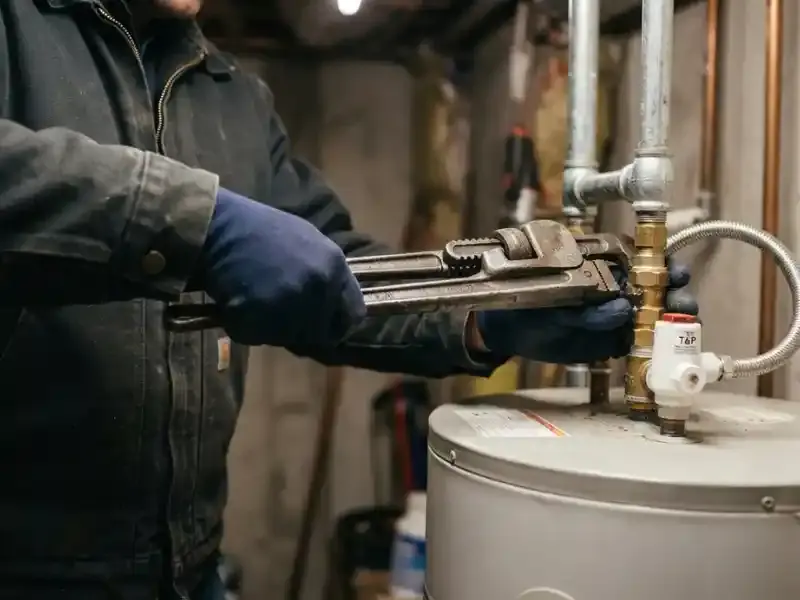
The cost of a water heater repair depends on which part failed, whether it is a gas or electric unit and how easy the unit is to reach. We do not publish a flat price here, because an igniter, an element and a leaking valve are different jobs. What you can do is understand what drives the price and when repair stops making sense.
This guide covers the common repairs, what affects each price and how to decide whether to fix or replace.
Common repairs and what affects the price
| Repair | What affects the cost | Typical context |
|---|---|---|
| Heating element (electric) | Part cost and tank draining | Lukewarm or no hot water |
| Thermostat | Part and access | Water too hot or too cold |
| Igniter or thermocouple (gas) | Part type and model | Pilot or burner will not stay lit |
| Relief valve | Valve and discharge pipe | Leak or discharge from the valve |
| Anode rod | Access above the tank | Rust or smell |
| Drain valve or fitting | Part and draining | Slow drip at the base |
Draining the tank adds time for most repairs. Hard-to-reach units, cramped closets and attic installations also take longer.
When repair is the right call
- The tank is sound and the failure is a replaceable part.
- The unit is within its normal life.
- There is no pattern of repeated failures.
- The repair costs a modest share of a replacement.
When repair is not worth it
A leaking tank cannot be repaired. A unit near the end of its life, or one that has needed several repairs in a short time, is usually better replaced. Paying for a repair on a unit that fails again in a few months spends money twice.
Ask the technician to explain why a part failed. If sediment, corrosion or a poor setting caused it, the same failure may recur.
How to compare a repair quote
- 1
Ask what failed
The quote should name the part and the cause.
- 2
Ask what is included
Parts, labor, draining and disposal should all be accounted for.
- 3
Ask about the warranty
Both the part and the labor should have terms.
- 4
Ask about the alternative
A fair quote includes the cost of replacement so you can compare.
Our water heater repair page describes how we diagnose, and our water heater replacement page shows what replacing the unit involves.
Gas and electric differences
| Fuel | Common failures | What to expect |
|---|---|---|
| Electric | Elements, thermostats, wiring | Often a quicker repair |
| Gas | Igniter, thermocouple, gas valve, venting | Safety checks add steps |
| Both | Relief valve, drain valve, sediment | Depends on tank condition |
Gas units involve venting and fuel, so a technician checks combustion safety as well as the failed part. That is one reason gas repairs can take longer.
If you smell gas, leave the building and call 911 and your gas utility from outside before calling anyone else.
What to do before the technician arrives
- Check that the breaker has not tripped or the gas supply valve is open.
- Look for water around the base and turn off the cold supply if you see any.
- Note the model, age and what the unit is doing, such as noises or error lights.
- Keep the area clear so the technician can reach the unit quickly.
These details help us bring the right parts and often shorten the visit. They also help us give you a clear price before work starts.
How to read two repair quotes
Check that both quotes name the same failed part and the same repair. A diagnosis fee, parts, labor and any disposal charge should all be listed. If one quote is lower because it uses a cheaper part, ask about the part warranty.
Be cautious of any quote that replaces several parts at once without testing each one. Good technicians test, explain and replace only what failed.
Warning signs that a repair will not last
- Rust colored water from the hot tap only.
- Water around the base that returns after wiping.
- A relief valve that discharges more than once.
- A tank that rumbles loudly from sediment.
- A unit that has failed twice in a year.
These signs suggest the tank itself is wearing out. A part may fix today's symptom, but the underlying problem remains.
Record the details first
Write down the model, the age, the error code or light pattern and what the unit did before it stopped. Photograph the data plate and the area around the tank. These details speed up the diagnosis and help you compare any repair quote against replacement.
Water heater not working?
Call and we will diagnose it and give you a clear price before work starts.
Small habits that prevent repairs
Flush the tank each year. Test the relief valve gently as the manufacturer advises. Keep the area around the unit clear and dry. Notice early signs such as popping noises or discoloration.
Many repairs are cheaper when caught early. A rusty drip at a fitting is cheaper to fix than a flood.
Water heaters in Marlboro homes
Marlboro Township's 2025 Water Quality Report notes supply from township wells and from Middlesex Water Company, and it does not include a hardness figure we can quote. Hard water leaves scale on elements and burners and shortens component life. Test your tap or ask your utility.
If a leak or a failed unit floods the basement, shut off the water to the heater and call us. For a water main problem on the utility side, the Water Utility Division is at (732) 536-0188, and the township police are at (732) 536-0100 after hours.
Questions homeowners ask
It depends on the part, the fuel type and access. We give a clear price before work starts.
If the tank is sound and the issue is a part, repair can make sense. If the tank leaks or repairs are repeating, replacement is usually better.
Common causes are a failed element or thermostat in electric units and a bad igniter, thermocouple or gas supply in gas units.
A leak at a fitting or valve often can. A leak through the tank cannot.
Shut off the water to the heater and call our 24/7 line. For a utility side issue call the Water Utility Division or the township police.