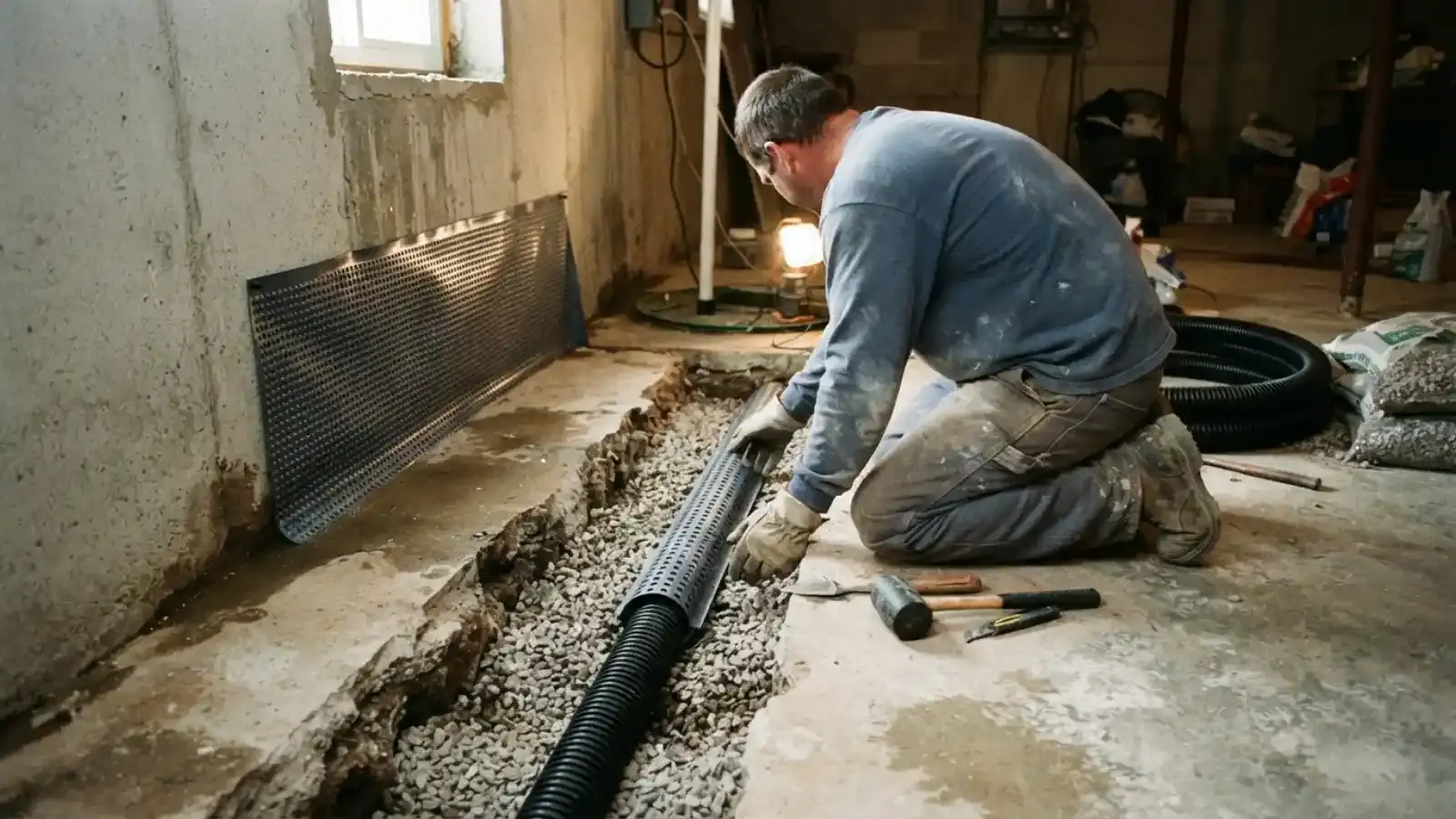
The cost of waterproofing a basement depends on where the water enters, how much there is and which method fits. We do not quote a generic number here, because a single average hides the difference between a small crack repair and a full drainage system. What follows explains the drivers so you can compare quotes sensibly.
The first question is always the source. Water coming through a floor crack, a wall joint or from poor grading are three different problems with three different solutions.
What drives the cost
| Factor | Why it matters | Effect |
|---|---|---|
| Source of water | Crack, joint, floor or grading | Defines the method |
| Extent | How many feet of wall or floor | More labor and materials |
| Access | Finished walls, tight spaces, landscaping | Raises prep and restoration |
| Method | Sealant, drainage, sump, exterior | Large range |
| Related work | Pump, drainage discharge, repairs | Adds items |
Interior drainage with a sump pump generally costs more than sealing a single crack. Exterior excavation costs more again. Every quote should say which method it uses and why.
Common methods
- Crack and joint sealing for isolated leaks.
- Interior drain channel and sump pump for water at the floor edge.
- Exterior waterproofing and drainage for foundation wall leaks.
- Regrading, gutter extensions and downspout fixes for surface water problems.
How to compare quotes
Ask each contractor for the same information in writing. What is the cause of the water, what will be done, which materials will be used and what does the warranty cover. A low number that skips the cause is often a repair that does not hold.
Ask about the pump size, the discharge location and backup power. Also ask what happens to finished walls or flooring during the work.
Check the simple things first
Many wet basements get worse because of gutters that dump water at the foundation, downspouts that end beside the wall or soil that slopes toward the house. Fixing these costs far less than interior work and sometimes solves the problem entirely.
Our basement waterproofing page describes what a visit covers, and our sump pump page covers the pump side.
Questions to ask before you sign
- What is causing the water, and how did you determine that.
- Which method will you use, and why not the alternatives.
- What does the warranty cover, and is it transferable.
- Who handles the discharge location and permits.
- How will you protect or restore finished surfaces.
A reliable contractor answers these plainly. If a quote is vague, ask for a revised version in writing before you decide.
Costs that are easy to forget
Wet basements often bring costs beyond the waterproofing itself. Removing damaged drywall or flooring, drying the space, replacing a failed pump, treating mold and restoring finishes can all add to the total. Ask which of these are in the quote and which are not.
If you plan to finish the basement later, tell the contractor. The layout of drains and the sump location affect how easily you can build around them.
A realistic order of operations
- 1
Find the source
Check gutters, downspouts, grading and window wells before assuming the foundation is at fault.
- 2
Fix the outside first
Extend downspouts, clear gutters and regrade where soil slopes toward the wall.
- 3
Seal isolated cracks
Small, dry cracks can be repaired without a full system.
- 4
Add drainage and a pump
If water still collects at the floor, an interior drain and sump pump manage it.
This order spends money where it helps most. A good contractor will often recommend the cheaper steps first, and that is a sign of an honest quote.
If every contractor proposes the most expensive method without checking the simple causes, get another opinion.
What a visit should include
A proper assessment looks at the inside and the outside. Inside, the contractor checks walls, the floor joint, window wells and any existing pump. Outside, they look at gutters, downspouts, grading and anything that sends water toward the foundation.
You should leave with a written explanation of what was found, photos of problem areas and a scope that matches. If a visit ends with only a price and no explanation, ask for more detail.
Signs the work is done right
- The contractor explained the cause and the plan in plain terms.
- The pump has a check valve, a clear discharge and a way to test it.
- The warranty is written, with terms you can read.
- Surfaces were restored or the quote said clearly that they were not.
- You can see the drain lines or access points for future service.
Moisture is not always a leak
Some basements feel damp because warm humid air meets cool walls and condenses. Tape a square of foil to the wall for a day. If the moisture forms on the outside of the foil, it is condensation. If it forms behind the foil, water is coming through the wall.
This simple test saves money. Condensation calls for a dehumidifier or better ventilation, not a drainage system.
Photograph before and after
Take dated photos of the water, the walls and any stored items before work begins, and again afterward. They support insurance conversations and give you evidence if a problem returns. Keep the contractor's written scope with them in one folder.
Basement taking on water?
Call and we will look at the source and give you a clear price before work starts.
Basements and drainage in Marlboro
Many Marlboro houses have basements, and the township's housing grew in waves from the 1950s through the early 1990s. Older foundations may show cracks or joint leaks, and newer ones can still suffer from grading and drainage issues.
Discharge locations matter. Permit rules vary, so ask the Marlboro Township Construction Division at (732) 536-0200, extension 1800, before changing drainage or digging at the foundation. Call 811 before any excavation.
Questions homeowners ask
It depends on the source, extent and method. We give a clear price before work starts, based on a visit.
Interior systems manage water that gets in. Exterior systems keep it out. The right choice depends on your foundation and the cause.
Sealant can work for isolated cracks, but it will not stop water pressure through a wall or floor.
It is part of many systems. It removes water that collects below the floor but does not stop it from entering.
Permit rules vary, so ask the Construction Division at (732) 536-0200, extension 1800.